
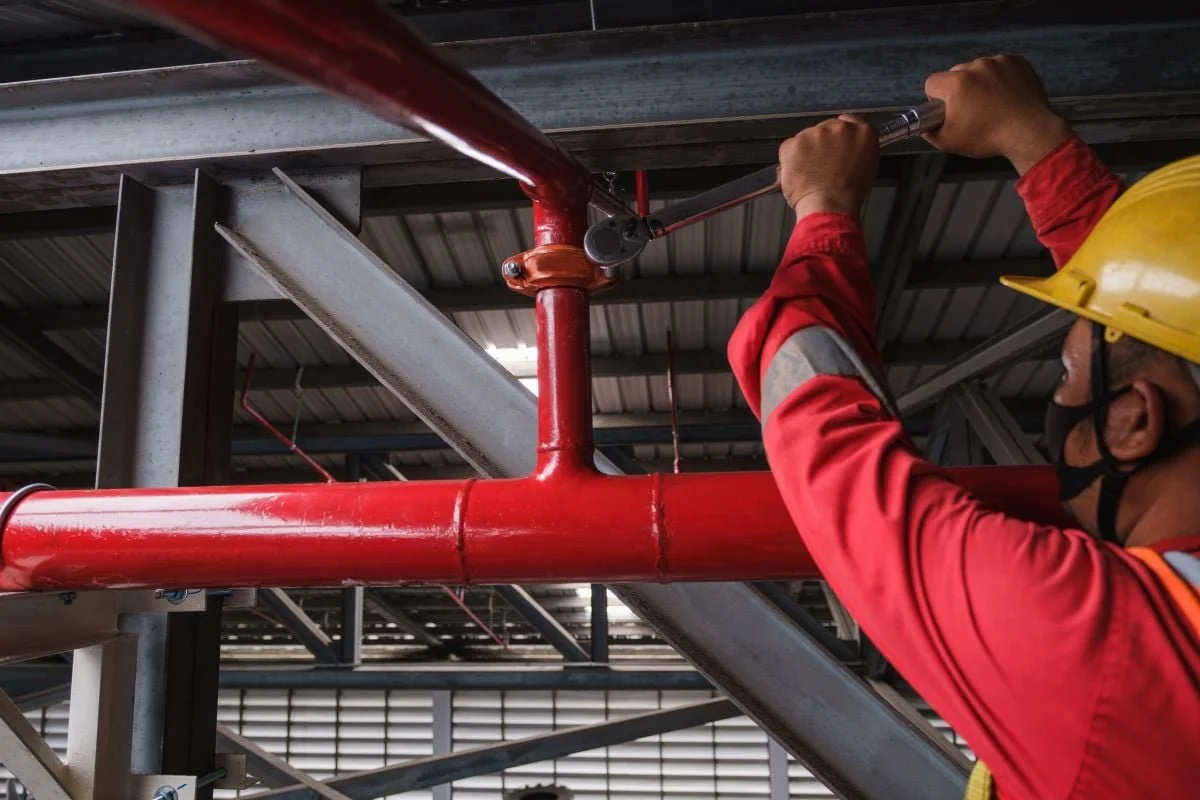
SPRINKLER RETROFITS
SAVE LIVES.
‘SPRINKLER SHOCK’?
There’s a lot of confusion about San Francisco’s high-rise fire sprinkler retrofit ordinance. Fire Safe SF is a group of fire safety advocates who want to help set the record straight — and provide some useful resources for residents who might be affected.
Does my building need a retrofit?
The SF Fire Department has identified a number of high-rise residential buildings constructed before 1975 that must comply with the City’s fire sprinkler retrofit ordinance, passed in 2022.
If your home is on the list, find out who can help you get started with your retrofit.
Here are the facts.
Myths are smoldering about high-rise fire sprinkler retrofitting in SF. But what are the truths about the process — and what does the City’s ordinance actually mean?
-
MYTH:
Sprinkler retrofitting is outrageously expensive and impossible for condo owners to afford.
FACT:
Actual retrofit costs — based on completed projects, national data, and SF’s own 2016 legislative analysis — are far lower than the inflated estimates circulated by opponents.
More facts:
Cities like San Jose, Philadelphia, and Honolulu have completed large-scale retrofits at predictable, manageable costs.
Financing can be spread over many years.
Retrofits increase property resilience, reduce insurance risk, and stabilize long-term value.
The cost of a single high-rise fire can exceed the cost of retrofitting an entire building.
Sprinklers are one of the highest-value, lowest-cost safety upgrades available.
-
MYTH:
Sprinkler retrofitting will displace residents, forcing people from their homes.
FACT:
Modern retrofits are routinely completed with residents in place.
More facts:
Union-signatory contractors regularly retrofit occupied high-rise buildings using:
Flexible piping systems,
Minimal-intrusion ceiling drops,
Unit-by-unit scheduling, and
Short in-unit work windows (often a few hours at a time).
Thousands of buildings nationwide have been retrofitted without displacement, including condos, hotels, offices, and mixed-use towers.
San Francisco’s 12-year compliance timeline further minimizes any disruption.
-
MYTH:
Sprinkler retrofitting isn’t necessary because high-rise fires are rare.
FACT:
Not only are high-rise fires increasingly common, but they result in higher fatality, injury, and property-loss risks than fires in lower buildings.
More facts:
During high-rise fires, flames spread vertically and stairwells fill with smoke, making evacuation far more dangerous.
National fire data shows that sprinklers:
Reduce fire deaths by 80% to 90%,
Reduce firefighter injuries,
Stop fires from spreading beyond the room of origin, and
Prevent catastrophic losses that displace hundreds of residents.
The risk is real — and sprinklers are the proven solution.
-
MYTH:
With sprinkler retrofitting requirements, San Francisco is doing something extreme that other cities don’t require.
FACT:
Dozens of U.S. jurisdictions have retroactive sprinkler retrofit laws already on the books. That includes major cities as well as entire states.
More facts:
Places where retroactive sprinkler retrofit laws have been successfully carried out include:
Atlanta,
Honolulu,
Los Angeles,
Louisville,
Philadelphia,
San Antonio, and
San Jose.
San Francisco’s 12-year timeline is moderate and mainstream compared to these cities.
-
MYTH:
There are cheaper or equivalent alternatives to sprinkler retrofitting.
FACT:
No alternative matches the
life-saving impact of sprinklers.More facts:
According to fire experts and national code organizations, including NFPA, ICC, and the National Fire Sprinkler Association:
Sprinklers are the most effective and reliable fire-safety system ever developed.
Alarm systems, stairwell pressurization, and compartmentation are valuable, but they do not extinguish a fire — only sprinklers do.
-
MYTH:
Buildings that have survived devastating fires this long don’t need sprinkler retrofitting now.
FACT:
Fire conditions today — more synthetic materials, faster-burning furniture, higher occupancy — mean fires can reach flashover in under five minutes, creating a dangerous scenario in a non-sprinklered tower.
More facts:
Older high-rises often lack:
Fire-resistant construction,
Modern detection systems,
Controlled exit paths,
Adequate smoke protection, and
Reliable water supply systems.
Upgrading life-safety systems in older buildings is responsible, overdue, and essential.
-
MYTH:
The City should delay or weaken the law to further study the issue of sprinkler retrofitting.
FACT:
This law was built on extensive analysis from the start.
More facts:
All of the following went into the development of San Francisco’s sprinkler retrofit ordinance:
A full legislative report by the Budget and Legislative Analyst,
National fire-safety research, and
Input from firefighters, engineers, and safety experts.
A long implementation runway already exists.
Delaying now serves only the narrow interests of a few well-funded condo associations rather than citywide public safety.
What sparked the City’s sprinkler retrofitting ordinances?
Find out more.
Sprinklers save lives.
Hear stories from people who know first-hand how powerful fire sprinklers can be in averting tragedy.
Don’t get burned. Stay informed.
Got questions? We can help.
Submit your email address to keep current with all of the latest and most relevant info on sprinkler retrofitting in SF.